
The White Cube Is a Crime Scene
I walked into the Museo de América in Madrid last spring, and I nearly screamed in the middle of the hall. There, under soft, reverent lighting, a vitrine displayed a collection of Taíno cemíes—sacred objects my ancestors carved from stone and wood, objects that held the breath of our gods. The label read: “Ritual Figure, Greater Antilles, 15th Century.” No mention of how it got there. No mention of the genocide that cleared the way for its theft. No mention of the blood. Just a date, a region, and the quiet, institutional lie that this object simply exists here, now, for our contemplation. This is not curation. This is a continuation of the colonial project by other means.
I am Valeria Escudero, and I refuse to be polite about this anymore. The European art institution—the museum, the gallery, the biennial—has built its cathedral on a mass grave, and it keeps lighting candles without acknowledging the bodies underneath. The problem is not a lack of diversity hires or a poorly worded wall text. The problem is structural. It is foundational. It is the refusal to name the violence that filled these rooms with gold, with ivory, with the sacred belongings of people who were not asked permission.

The Architecture of Amnesia
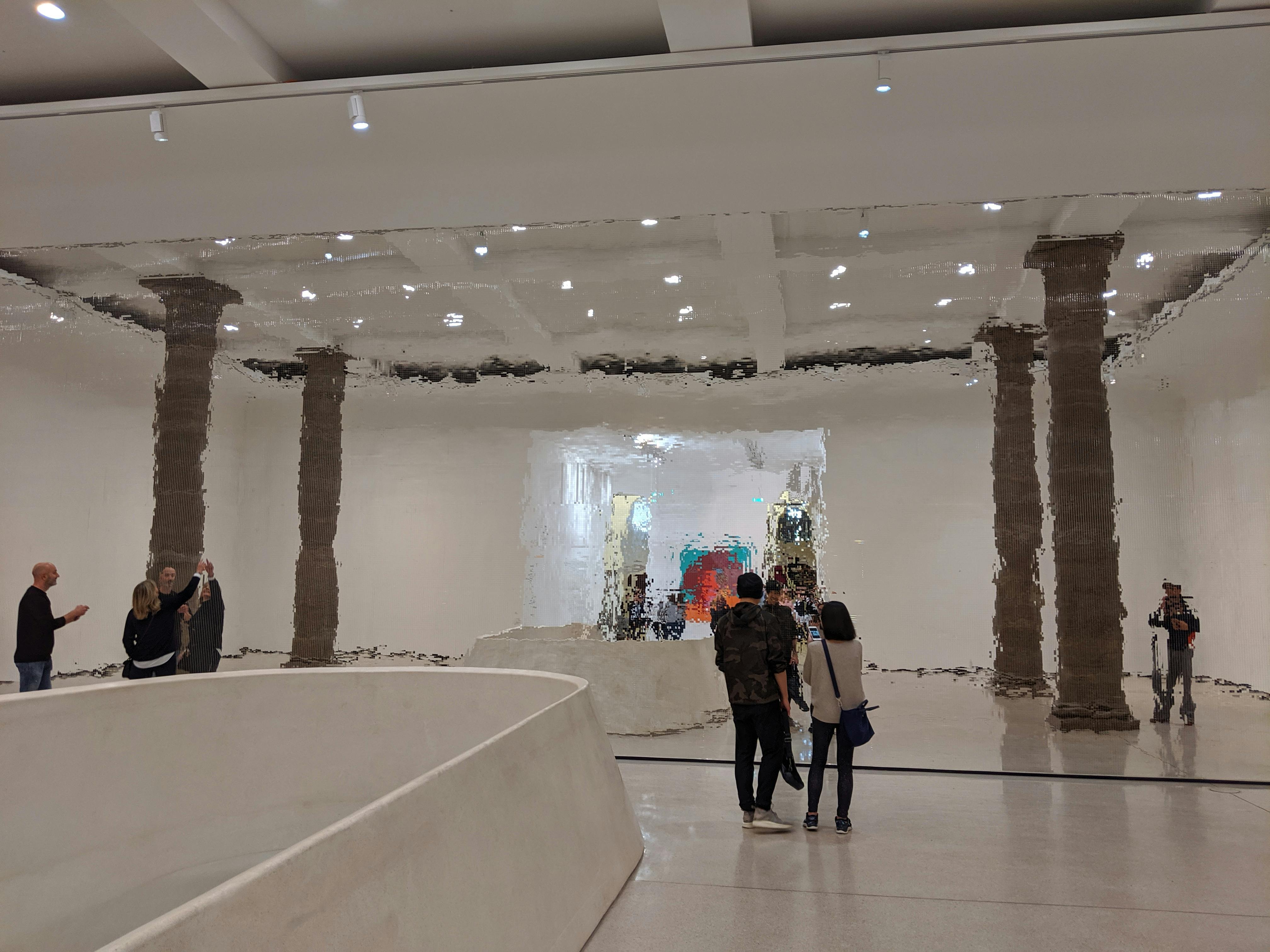
European museums are designed to make you forget. The white walls, the hushed voices, the chronological march from “Antiquity” to “Modernity”—it all whispers a single narrative: civilization was born here, matured here, and now generously allows the rest of the world to visit. When the British Museum displays the Parthenon Marbles, it does not show you the explosives Lord Elgin used to hack them from the temple. When the Musée du Quai Branly in Paris shows a Songye power figure from the Democratic Republic of Congo, it does not mention the Belgian officers who burned villages to collect such “specimens.” The architecture itself is a form of anesthesia.
I have watched visitors float through the galleries of the Rijksmuseum in Amsterdam, marveling at the still lifes of tropical fruits and Chinese porcelain, never once asked to consider that these paintings are inventories of colonial extraction. The pineapple was not native to Haarlem. The porcelain did not arrive via friendly trade. The entire Dutch Golden Age was financed by the spice trade, by the enslavement of people in the Banda Islands, by a machinery of death that the museum frames as a “maritime achievement.” This is not a sin of omission. This is an active, ongoing strategy.
The Prado in Madrid holds the spoils of the Spanish Empire in its basement. Literally. I have seen the storage rooms, the rows of pre-Columbian gold packed in acid-free paper, catalogued with numbers, stripped of names. These are not art objects. They are hostages. And the museum keeps them in the dark, because to bring them into the light would mean asking uncomfortable questions about the hands that carried them across the ocean.

The Restitution Circus
When European institutions do acknowledge colonial context, it is often a performance. The so-called “restitution debate” has become a circus of bureaucratic delay. Germany’s return of Benin Bronzes was hailed as a breakthrough, but look closer: many of the objects are on “permanent loan,” a semantic trick that keeps legal ownership in German hands. France’s much-publicized return of 26 artifacts to Benin was a fraction of the 90,000 African objects in its museums. The Humboldt Forum in Berlin opened with great fanfare about “decolonizing” its collections, then proceeded to display looted objects with text panels written by the same institutional voices that spent decades denying the violence.
And let us talk about the condition of these returns. Nigeria had to build a new museum—to European climate-control standards—just to qualify for the “loan” of its own stolen heritage. The paternalism is staggering. The underlying message is clear: we took your things because you could not be trusted to care for them, and now we will return them only if you prove you can care for them like we do. This is not restitution. This is probation.
Meanwhile, the British Museum hides behind the British Museum Act of 1963, a legal fortress that forbids deaccessioning. It is a law written by the descendants of empire to protect the loot of empire. The museum’s director, Hartwig Fischer, once said the Parthenon Marbles are “part of everyone’s shared heritage and transcend cultural boundaries.” This is the language of the colonizer dressed as a universalist. The Marbles do not transcend anything. They were carved in Athens, by Athenians, for the Parthenon. They are not a universal treasure. They are a specific theft, and calling them “shared heritage” is a way of laundering the crime.
The Contemporary Art Complicity
Do not think the contemporary art world is innocent. The biennial circuit—Venice, Documenta, Manifesta—loves to platform artists from the Global South while remaining utterly dependent on the old colonial infrastructure. Who funds these shows? The same banks that financed the slave trade. The same families whose wealth was built on plantations. The same auction houses that sell looted antiquities without checking provenance. The art market is an engine of colonial continuity, and the institutions that stage critical exhibitions about decolonization are often doing so on the dime of the very structures they pretend to critique.
Documenta 15, curated by the Indonesian collective ruangrupa, was a gutsy attempt to break this mold—and the backlash it got from the German press was telling. Critics whined it was not “art” enough, too messy, too collective, too political. What they really meant was: it did not fit the European definition of aesthetic value, a definition forged in the same imperial crucible that sorted the world into “civilized” and “primitive.” The scandal over alleged antisemitic imagery in a banner by the collective Taring Padi became a club to discredit the whole exhibition, a way for the establishment to claw back control. The message was received: you may speak, but only in our language, and only about the things we allow.
The Violence of the Aesthetic
There is a deeper sickness here, one that goes beyond provenance and restitution. It is the very category of “art” itself, as Europe has defined it. When African masks are displayed in vitrines, divorced from their ritual context, they become something they were never meant to be: objects of passive visual consumption. The museum transforms a living spiritual entity into a specimen. This is not appreciation. This is a second death. The mask was already stolen from its community; now it is stolen from its meaning.
I think of the nkisi nkondi figures—power objects from the Kongo people—scattered across European museums. These figures were activated by driving nails into them, each nail a covenant, a prayer, a curse. In the museum, the nails are still there, but the ritual is dead. The figure is frozen, sterilized, labeled “Fetish Object, 19th Century.” The museum has performed a lobotomy on the sacred. And we are supposed to stand there, heads tilted, appreciating the “formal qualities” of the carving. This is not just ignorance. It is an act of ongoing violence.
The same logic applies to human remains. The remains of Sarah Baartman were displayed in the Musée de l’Homme in Paris until 1974. Thousands of Indigenous skulls sit in the storerooms of European universities, collected by “race scientists” to prove white superiority. Nelson’s Column in London was built with the labor of enslaved people, and the National Gallery stands on a former slave burial ground. The foundations are soaked in blood, and the institutions act as if a few diversity panels can wash it away.
The Lie of Universal Heritage
The most insidious argument the European art institution makes is the “universal museum” claim. The idea that certain objects belong to all of humanity, and that London or Paris or Berlin are the natural custodians of this universal heritage. This is a lie. It is a lie that assumes Europe is the center, the neutral arbiter, the safe keeper of world culture. It erases the fact that these objects were acquired through military conquest, economic coercion, and cultural genocide. There is nothing universal about the British Museum housing the Rosetta Stone while Egypt builds a new museum in Giza with a replica. There is nothing universal about the Louvre displaying the treasures of Dahomey while Benin constructs a cultural quarter to welcome home what was taken.
The universal museum is a fantasy of imperial benevolence. It pretends that the flow of objects from South to North is natural, inevitable, even generous. It ignores the counter-flow: the European objects that ended up in Africa or Asia did so through trade, gift, or payment. The Benin Bronzes were not traded. They were seized in a punitive expedition that burned Benin City to the ground. The Maqdala treasures in the Victoria and Albert Museum were looted by British troops who ransacked the fortress of Emperor Tewodros II, who committed suicide rather than be captured. These are not accidents of history. They are war crimes preserved in plexiglass.
What Decolonization Actually Requires
Decolonization is not a metaphor. It is not a workshop. It is not a new label on an old vitrine. It is the physical return of stolen objects to their communities of origin. It is the transfer of legal title, not conditional loans. It is the dismantling of the legal frameworks—like the British Museum Act—that protect theft. It is the acknowledgment, in every gallery, of how each object arrived, with the names of the colonizers, the dates of the massacres, the number of the dead. It is the end of the museum as a temple and the beginning of the museum as a place of truth-telling, even when that truth is ugly.
It also requires a redistribution of resources. European museums are staggeringly wealthy compared to their counterparts in the Global South. The British Museum’s endowment is larger than the entire cultural budget of many African nations. If the universal museum argument has any sincerity, then let there be a universal redistribution of funding. Let the expertise, the conservation technology, the climate-control systems be shared—not as charity, but as reparation. Let the former colonies decide what happens to their heritage, not the former colonizers.
And it requires a new way of seeing. We must stop evaluating non-European objects by European aesthetic standards. We must stop calling ritual objects “art.” We must learn to sit with the discomfort of not understanding, of not possessing, of not displaying. Some things are not meant for our eyes. Some things must go back, not to a museum, but to the earth, to the shrine, to the secret society that made them. The museum’s compulsion to exhibit everything is itself a colonial impulse—the desire to classify, to own, to render visible. True decolonization might mean empty galleries. It might mean silence. It might mean giving up the very idea of the museum as we know it.
FAQ
Why can’t museums just keep objects and provide better historical context?
Because the presence of the object itself is the violence. Contextual labels are an improvement only if the community of origin is involved in writing them, but even then, the object remains stolen. Would you accept a thief keeping your family heirlooms if they put up a nice sign explaining how they got them? The physical return is the minimum requirement of justice. Everything else is justification.
What about objects that were legally purchased or gifted?
“Legal” in a colonial context is a meaningless word. The laws were written by the colonizers. “Purchase” often occurred under duress, at gunpoint, or from individuals who had no right to sell communal sacred objects. “Gifts” were frequently extracted through power imbalances. Every acquisition from the colonial period must be presumed coercive until proven otherwise, and the burden of proof must lie with the museum, not the claimant community.
Won’t returning objects empty European museums and destroy cultural exchange?
European museums will not be empty. They hold millions of objects; the percentage under repatriation claims is tiny. And cultural exchange is not a one-way street of Northern accumulation. True exchange involves reciprocity, consent, and the right of the source community to say no. If a museum cannot survive without stolen goods, perhaps it should not survive. The fear of emptiness is a fear of losing control, not a fear of losing culture.
What can I do as a visitor to these institutions?
Stop being a passive consumer. Ask the guards, the docents, the curators: How did this get here? Was it stolen? Who was paid, and what was the price? If the institution cannot answer, make it uncomfortable. Write to the director. Demand provenance research. Support organizations like Open Restitution Africa or Returning Heritage that track and advocate for repatriation. And consider whether your ticket money is better spent supporting Indigenous-led cultural initiatives rather than colonial storehouses.
I am not asking for reform. Reform implies that the structure is basically sound and just needs adjustment. The European art institution is not sound. It is a monument to theft, a machine for the production of historical amnesia, a temple to white supremacy dressed in the robes of aesthetic contemplation. It must be dismantled, not renovated. The objects must go home. The narratives must be rewritten by those who were silenced. And the rest of us—the descendants of the colonized, the allies, the people who refuse to look away—must keep screaming until the white walls crack.
I will not be quiet. I will not be grateful for the scraps of recognition thrown from the high table. I will not call loot “art” and murder “exploration.” The museum is a crime scene. Until it confesses, until it returns what it stole, until it kneels before the communities it has wronged, there is no beauty here. There is only the echo of violence, polished and lit for your Sunday afternoon.